
 Pin it
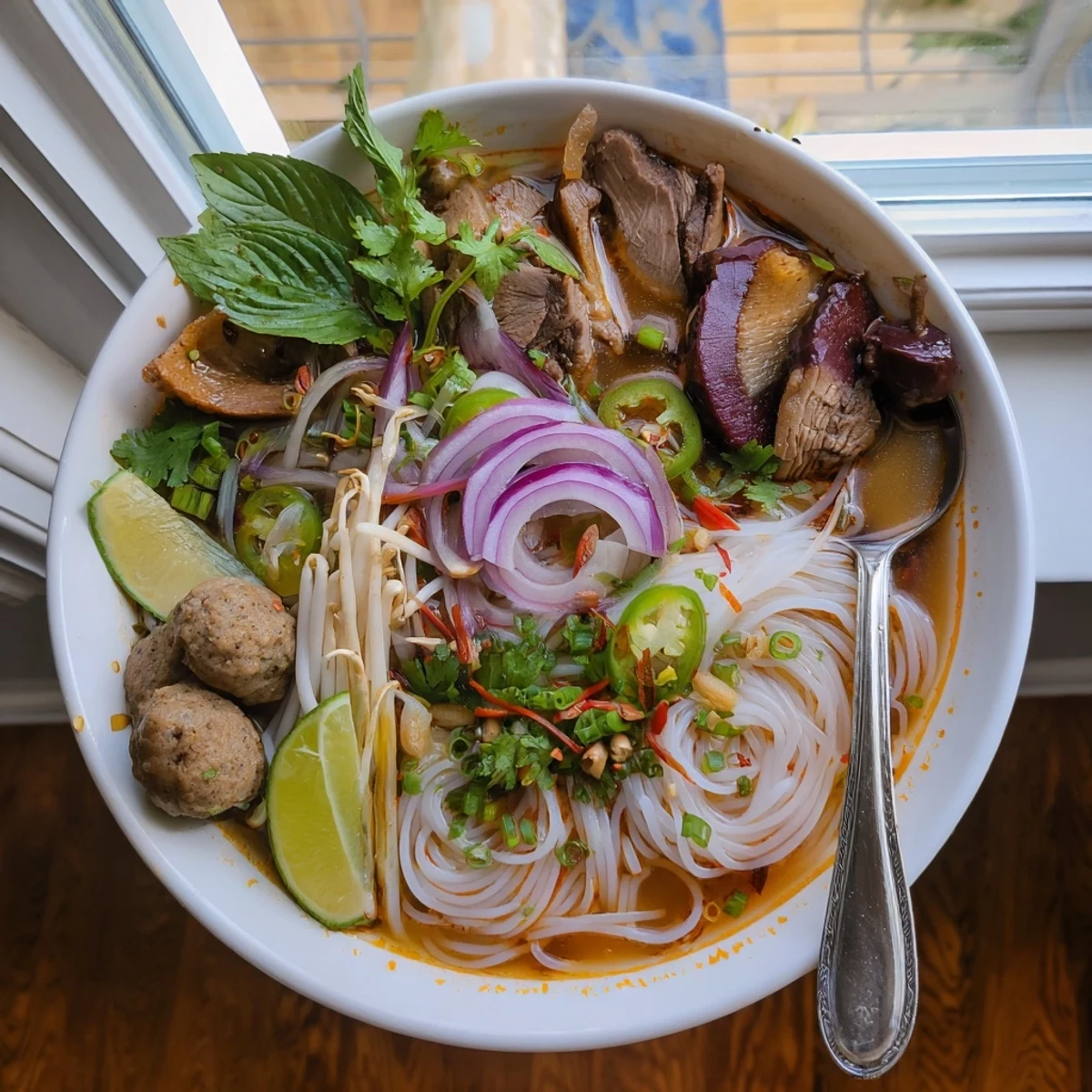
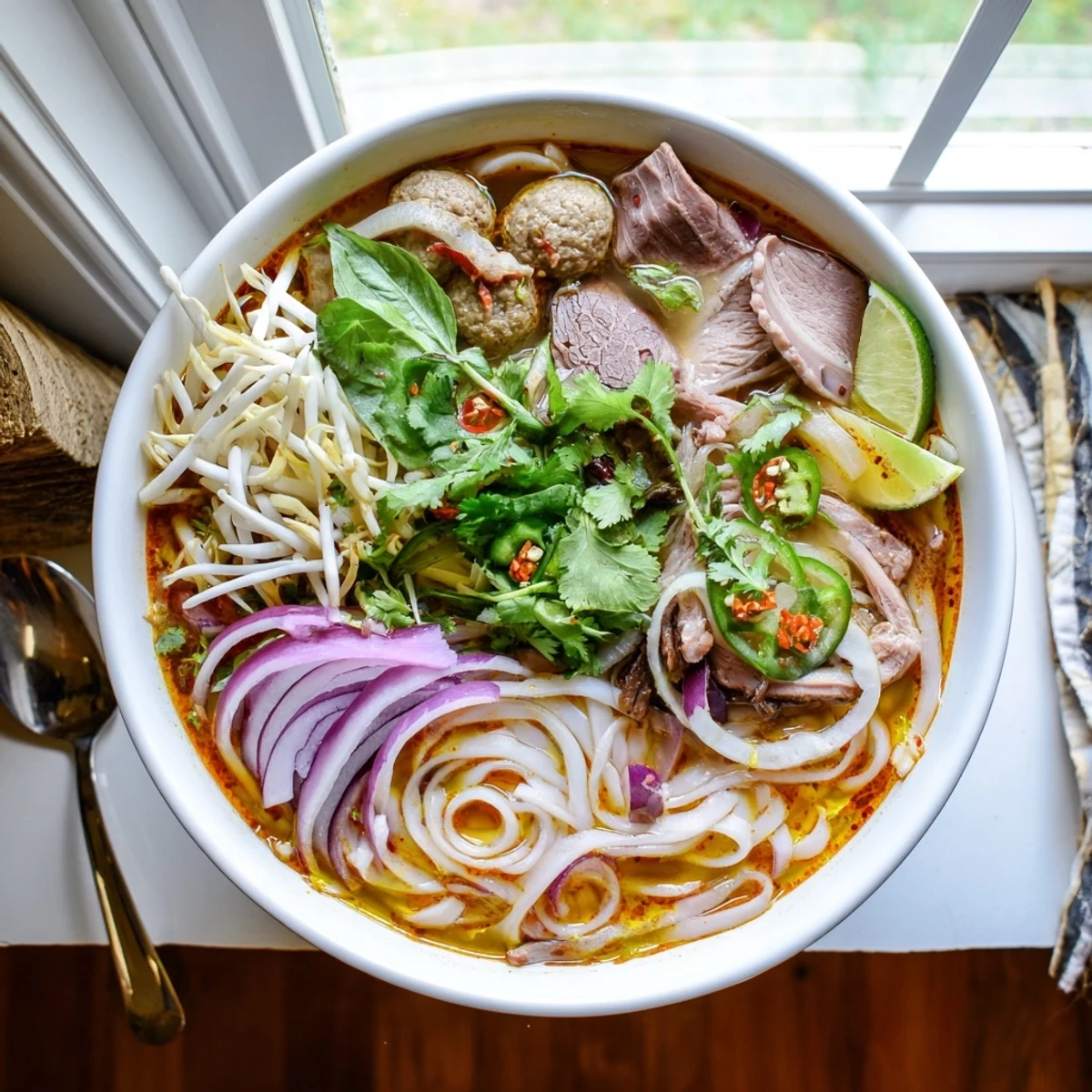
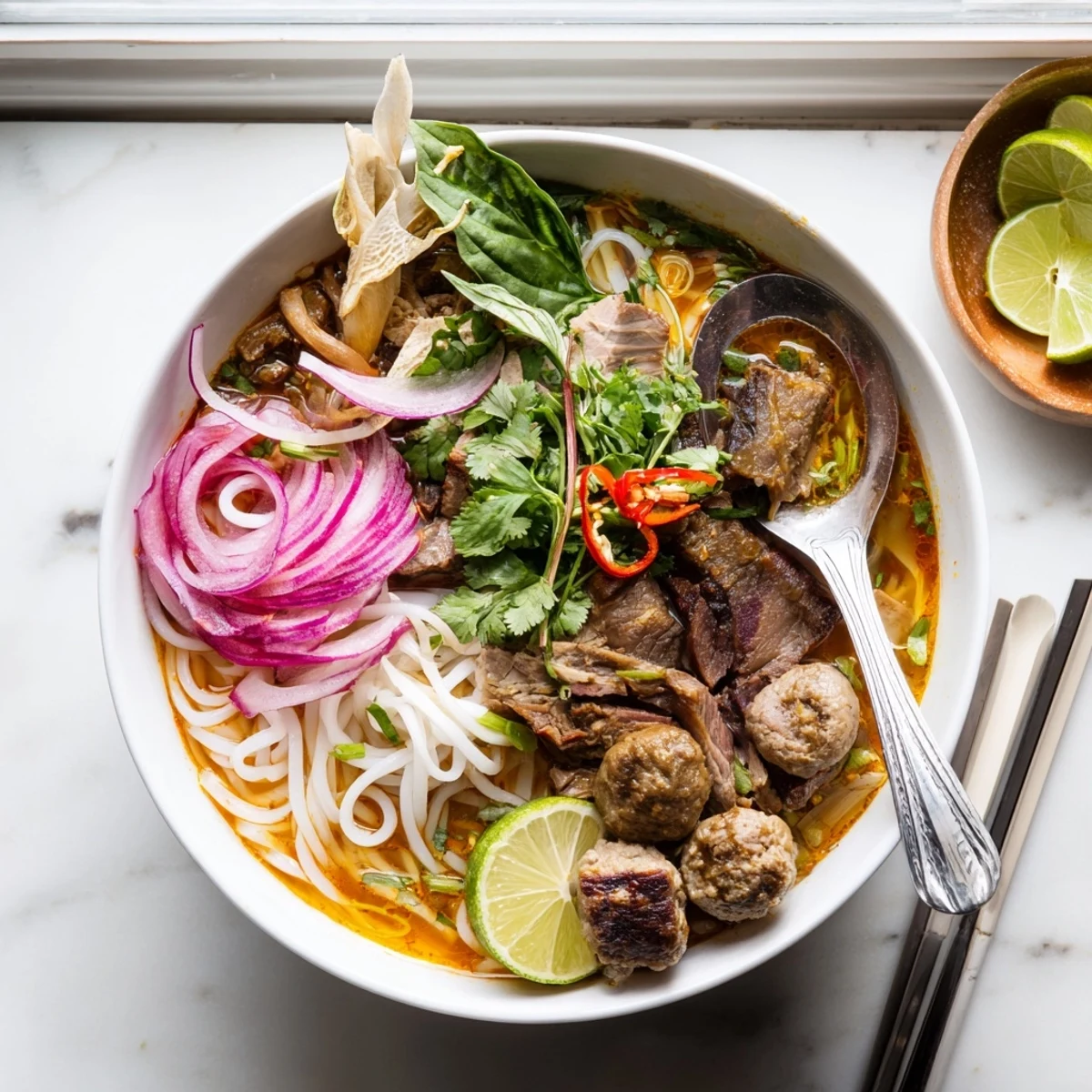
 This beloved central Vietnamese specialty delivers a complex, spicy broth infused with lemongrass, shrimp paste, and aromatic chili oil. The traditional preparation requires patience—simmering beef shank and pork hock for two hours creates a deeply flavorful foundation. Thick round rice noodles provide the perfect base for tender meats, while fresh herbs, bean sprouts, and lime wedges brighten each bowl. The signature red hue comes from annatto-infused chili oil, which also imparts a gentle heat that balances the savory richness of the broth.
The steam rising from my first bowl of Bún Bò Huế in a tiny Saigon corner shop still haunts me in the best way possible. That intoxicating lemongrass hit cutting through humid morning air, the fiery red oil swirling on top like something dangerous and beautiful. I watched the owner chop beef with practiced precision while her grandson played at her feet, both completely ignoring my wideeyed wonder at the broth she had been perfecting for decades.
My kitchen smelled like a Vietnamese street market for three solid days after my first attempt. Neighbors actually knocked on my door asking what on earth I was cooking, which felt like a strange victory. I may have gone overboard with the chili oil that first time, watching my family reach for water between enthusiastic bites, but nobody stopped eating.
Ingredients
- Beef shank bonein: The collagen from these bones creates that rich body that makes Hué broth legendary
- Pork hock: Adds sweetness and depth that beef alone cannot achieve
- Lemongrass stalks: Bruise them hard to release those citrusy oils this is nonnegotiable
- Shrimp paste: Dont be intimidated by the smell it transforms into something magical in the broth
- Rock sugar: Dissolves slowly creating a rounded sweetness that regular sugar cant replicate
- Annatto seeds: Traditional for that signature red hue but honestly optional if you cannot find them
- Thick rice noodles: These round noodles are essential thinner pho noodles will not hold up to the robust broth
- Fresh herbs: The herb crown at the end is not garnish it is half the experience
Instructions
- Build Your Foundation:
- That first parboil might feel like an extra step but your clarity will thank you later. Watch the water turn gray with impurities then rinse everything until the meat gleams.
- Simmer With Patience:
- Keep the heat low enough that bubbles barely break the surface. Skim faithfully every 20 minutes because clarity equals pride in Vietnamese cooking.
- Create The Red Oil:
- Let those annatto seeds dance in hot oil until they release their sunset color. The moment your kitchen fills with garlic and shallot perfume you are on the right track.
- Bring It Together:
- Ladle that steaming broth over your arranged bowls and watch the proteins cook just slightly from the residual heat. That hiss is the sound of something extraordinary happening.
 Pin it
 My friend visiting from Huế took one sip and started crying because it reminded her of Sunday mornings at her grandmothers house. Food reaching across oceans and decades to touch something deep inside us.
Finding The Right Balance
The secret is tasting constantly and adjusting because every batch of broth tells you something different. Some days it needs more salt others a touch more sugar.
Making It Your Own
Traditionalists might raise eyebrows but a splash of coconut milk at the end creates the most luxurious silkiness. Sometimes innovation lives respectfully alongside tradition.
Serving It Right
Bring everything to the table family style and let everyone build their own perfect bite. The ritual of assembling adds something essential to the experience.
- Keep herbs separate until serving or they will wilt into sadness
- Extra lime wedges on the table are not optional
- Have plenty of napkins ready because this is not neat food
 Pin it
 May your kitchen be filled with steam and your table surrounded by people who understand that some soups are worth waiting three hours for.
Recipe FAQs
- → What makes Bun Bo Hue different from pho?
-
Bun Bo Hue originates from central Vietnam and features a spicier, more complex broth with lemongrass and shrimp paste. It uses thick round rice noodles instead of flat rice noodles, and typically includes pork hock alongside beef. The signature red chili oil and bold aromatic profile set it apart from the lighter, anise-forward pho broth.
- → Can I make the broth in advance?
-
Absolutely. The broth actually develops deeper flavors when made ahead—prepare it up to 2 days before serving and refrigerate. The fat will solidify on top, making it easy to skim off if desired. Reheat gently before assembling bowls, and adjust seasoning as the flavors concentrate when chilled.
- → Is shrimp paste essential for the authentic flavor?
-
Shrimp paste (mam ruoc) provides the distinctive umami foundation that defines this dish. While you can substitute with extra fish sauce, the flavor profile will change. Look for fermented shrimp paste at Asian grocers—start with a small amount and adjust to taste, as its potency varies between brands.
- → What type of beef works best?
-
Beef shank with bone is traditional—it contributes rich body to the broth and becomes meltingly tender after long simmering. Brisket or flank can be added for additional texture and quicker-cooking protein slices. The combination creates varied mouthfeel throughout the bowl, from gelatinous shank to slices of lean beef.
- → How spicy should the broth be?
-
The traditional Hue style delivers noticeable but not overwhelming heat. The aromatic chili oil provides customizable spiciness—serve it on the side so diners can adjust. Start with 2 tablespoons of chili flakes in the oil, adding more if you prefer intense heat. Remember that the broth itself contains gentle warmth from the aromatics.
- → Can I omit pork blood cubes?
-
Certainly. Blood cubes are traditional but optional—many home cooks and restaurants skip them. Their iron-rich, mineral flavor adds depth, but the bowl remains satisfying without them. If you're curious about the authentic experience, look for them at Asian butcher shops or substitute with silken tofu cubes for a different texture.