
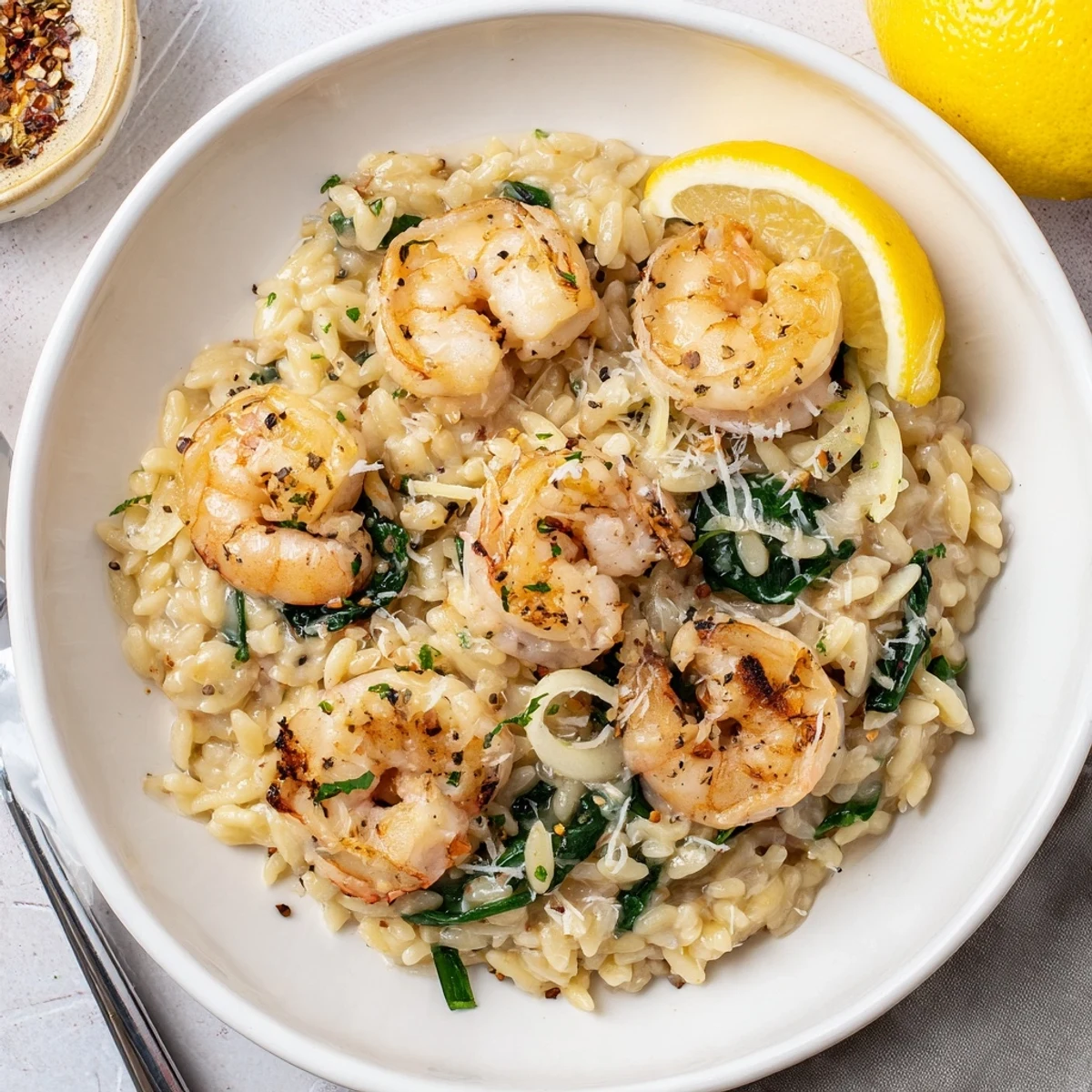
 Pin it
 Begin by patting shrimp dry, seasoning with salt and pepper, and searing in butter until just pink. Remove and set aside. Sauté onion and garlic, add orzo and toast briefly, then deglaze with a splash of white wine. Gradually add warm broth, stirring until the orzo is tender and creamy (about 10–12 minutes). Stir in heavy cream and Parmesan, fold in spinach until wilted, return shrimp, finish with lemon zest, juice and parsley. Serves four and takes roughly 35 minutes from start to finish.
The rain was hammering against the kitchen window the evening I threw this dish together with whatever the fridge offered, and by the third bite my roommate stopped mid-sentence and just stared at her plate. That creamy, lemon-slicked orzo with its pink-curl shrimp had turned a miserable Tuesday into something worth remembering. I have made it at least forty times since, and it never lasts more than fifteen minutes on the table.
I once served this at a small dinner party where my friend Miguel claimed he did not like shrimp, ate two full bowls, and then asked for the recipe before leaving. The spinach and lemon keep it from feeling heavy, and the cream is just enough to coat everything without turning it into soup.
Ingredients
- 1 pound (450 g) large shrimp, peeled and deveined: Buy the biggest shrimp you can find because they stay tender and juicy inside even after a quick sear.
- 1 1/2 cups (300 g) orzo pasta: Toast it in butter before adding liquid and you will unlock a nutty depth most people skip entirely.
- 1 small yellow onion, finely chopped: Finely is the key word here because chunky onion pieces distract from the creamy texture.
- 3 cloves garlic, minced: Fresh garlic only, and add it late so it sweetens rather than burns.
- 1 cup baby spinach, packed: It wilts down to almost nothing, so do not be alarmed by how much raw spinach goes in.
- Zest of 1 lemon: Rub the zest into the butter with your fingers before cooking and the oils will perfume the whole pan.
- 2 tablespoons fresh parsley, chopped: Flat-leaf parsley stirred in at the end tastes completely different from the dried version.
- 3 tablespoons unsalted butter: Unsalted lets you control the seasoning, and browning it slightly adds a wonderful background note.
- 1/2 cup (120 ml) heavy cream: You can swap half-and-half for a lighter dish, but the full cream version clings to every grain of orzo like a dream.
- 1/2 cup (50 g) grated Parmesan cheese: Grate it yourself from a block because pre-shredded Parmesan contains anti-caking agents that make the sauce grainy.
- 3 cups (720 ml) low-sodium chicken or vegetable broth: Warm the broth before adding it so the orzo cooks evenly without temperature shocks.
- Juice of 1/2 lemon: A squeeze at the very end wakes up every flavor on the plate.
- 2 tablespoons dry white wine (optional): Even a splash deglazes the pan and adds a subtle acidity that pulls everything together.
- Salt, to taste: Season in layers throughout cooking rather than all at the end.
- Freshly ground black pepper, to taste: Coarsely cracked pepper gives tiny bursts of warmth that complement the cream beautifully.
- 1/2 teaspoon crushed red pepper flakes (optional): Just a pinch balances the richness without making it spicy.
Instructions
- Season and Sear the Shrimp
- Pat the shrimp completely dry with paper towels and toss them with a generous pinch of salt and pepper. Sear them in a tablespoon of hot butter for about a minute per side until they curl and turn pink, then immediately pull them off the heat so they stay tender inside.
- Build the Aromatic Base
- In the same pan, melt the remaining butter and let it foam until it just starts to smell nutty. Toss in the chopped onion and stir until it turns glassy and soft, then add the garlic and swirl it for about thirty seconds until your kitchen smells incredible.
- Toast the Orzo
- Pour the dry orzo into the pan and stir it constantly for about two minutes until the edges turn slightly golden. Splash in the wine if you are using it and let it bubble away, scraping up any lovely browned bits stuck to the bottom of the pan.
- Cook the Orzo in Broth
- Add the warm broth half a cup at a time, stirring often and waiting until the liquid is mostly absorbed before adding the next splash. This takes roughly ten to twelve minutes, and you will know the orzo is ready when it is tender but still has a slight bite at its center.
- Make It Creamy
- Pour in the heavy cream and scatter the grated Parmesan over the top, then stir gently until the cheese melts into a smooth, glossy sauce. Fold in the baby spinach and let it cook for about a minute until it collapses into the pasta.
- Bring Everything Together
- Slide the reserved shrimp back into the pan along with the lemon zest, lemon juice, chopped parsley, and red pepper flakes if you want a gentle warmth. Stir carefully so you do not break the shrimp, taste for salt and pepper, and serve immediately with extra parsley scattered on top.
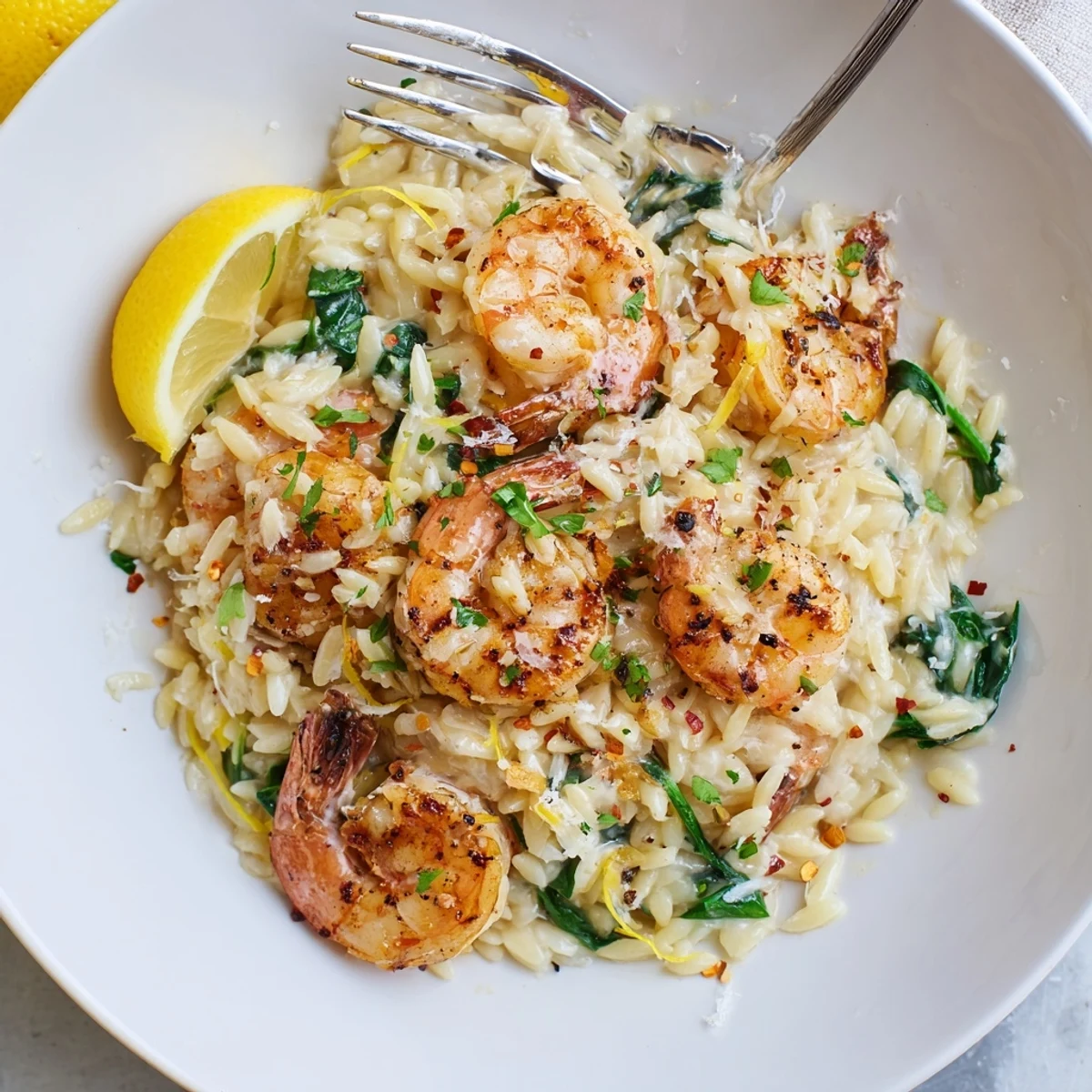 Pin it
 There is something about the way the cream catches on each tiny grain of orzo that makes this dish feel like a love letter written in a hurry. I have caught myself standing at the stove eating it straight from the pan more times than I care to admit.
Choosing the Right Shrimp
Frozen jumbo shrimp work beautifully here as long as you thaw them properly under cold running water and dry them thoroughly before seasoning. I learned the hard way that wet shrimp steam instead of sear, and you lose that caramelized crust that makes all the difference.
Wine and Drink Pairings
A chilled glass of Pinot Grigio or Sauvignon Blanc sitting next to this plate turns a random Wednesday into something that feels deliberate and special. The citrus and mineral notes in those wines mirror the lemon in the dish and cut through the cream effortlessly.
Storing and Reheating Leftovers
If you are lucky enough to have leftovers, they will keep well in an airtight container in the refrigerator for up to three days. Reheating requires a splash of broth or water and gentle heat on the stove because the orzo drinks up the sauce as it sits.
- Stir constantly while reheating so the cream does not separate or cling to the pan in a stubborn film.
- A fresh squeeze of lemon and a dusting of Parmesan right before serving will make leftovers taste nearly as good as the first night.
- Freezing is not recommended because the cream sauce can break and the shrimp texture suffers after thawing.
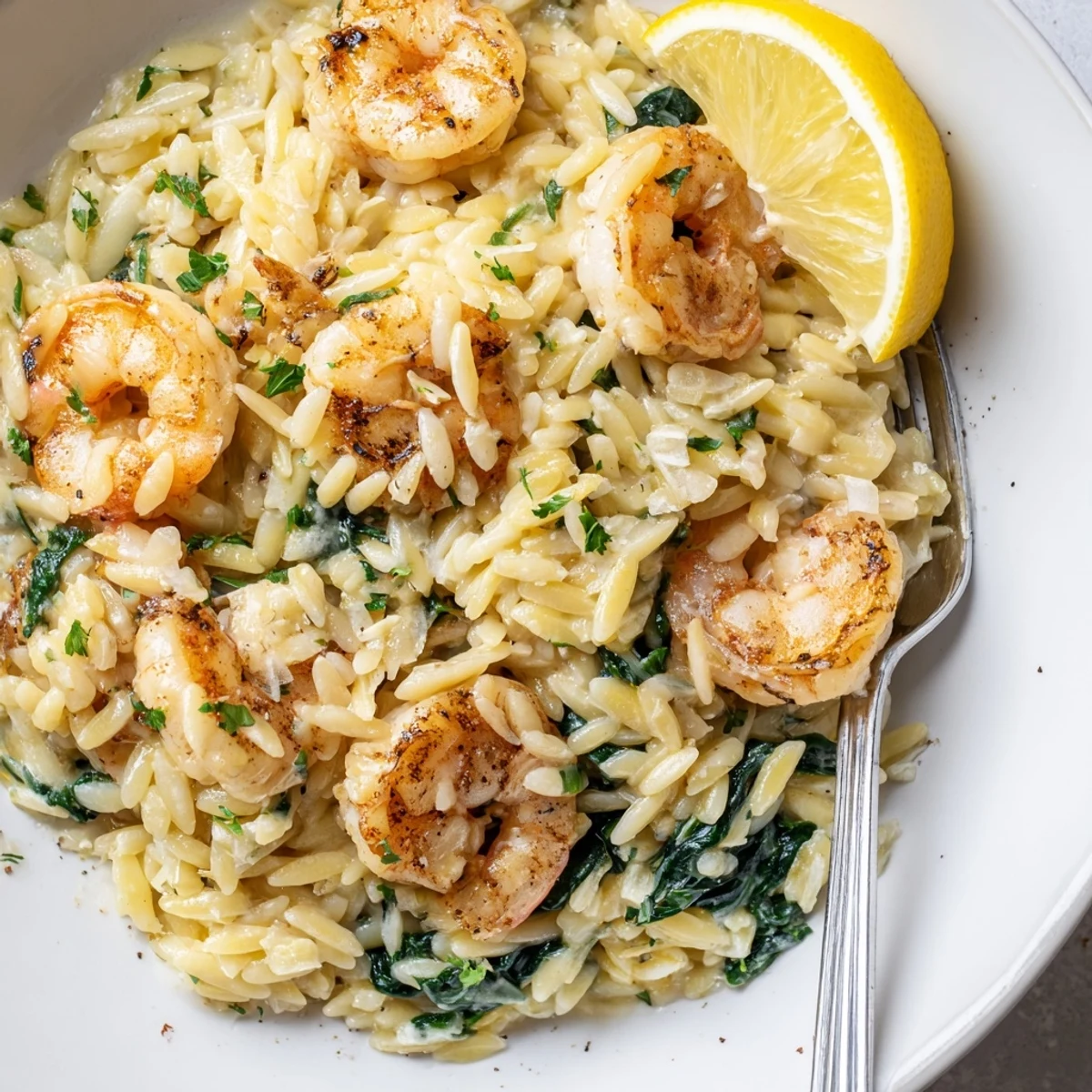 Pin it
 Keep this recipe close because it will rescue more dinners than you expect, and the people you feed it to will ask for it again. A pot of creamy shrimp orzo on the stove is proof that a little butter and a lot of stirring can solve almost anything.
Recipe FAQs
- → Can I use frozen shrimp?
-
Yes. Thaw completely in the refrigerator or under cold running water, pat very dry to remove excess moisture, and adjust searing time so the shrimp stay tender rather than becoming rubbery.
- → How do I prevent the orzo from sticking?
-
Toast the orzo briefly in butter or oil before adding liquid, and add broth in small increments while stirring frequently to keep the grains separate and develop a silky texture.
- → What can I substitute for heavy cream?
-
Use half-and-half for a lighter finish, or combine whole milk with a tablespoon of cornstarch for body. Add gently over low heat to avoid curdling.
- → How can I make this dairy-free?
-
Replace butter with olive oil, use a plant-based cream alternative or full-fat coconut milk, and sub in nutritional yeast or a dairy-free hard cheese substitute for savory depth.
- → What is the best way to reheat leftovers?
-
Warm gently in a skillet over low heat with a splash of broth or water to restore the sauce's creaminess; stirring often prevents the shrimp from overcooking.
- → What sides or pairings work well?
-
Serve with a crisp green salad, crusty bread, or roasted vegetables. A chilled Pinot Grigio or Sauvignon Blanc complements the lemon and herb notes nicely.