
 Pin it
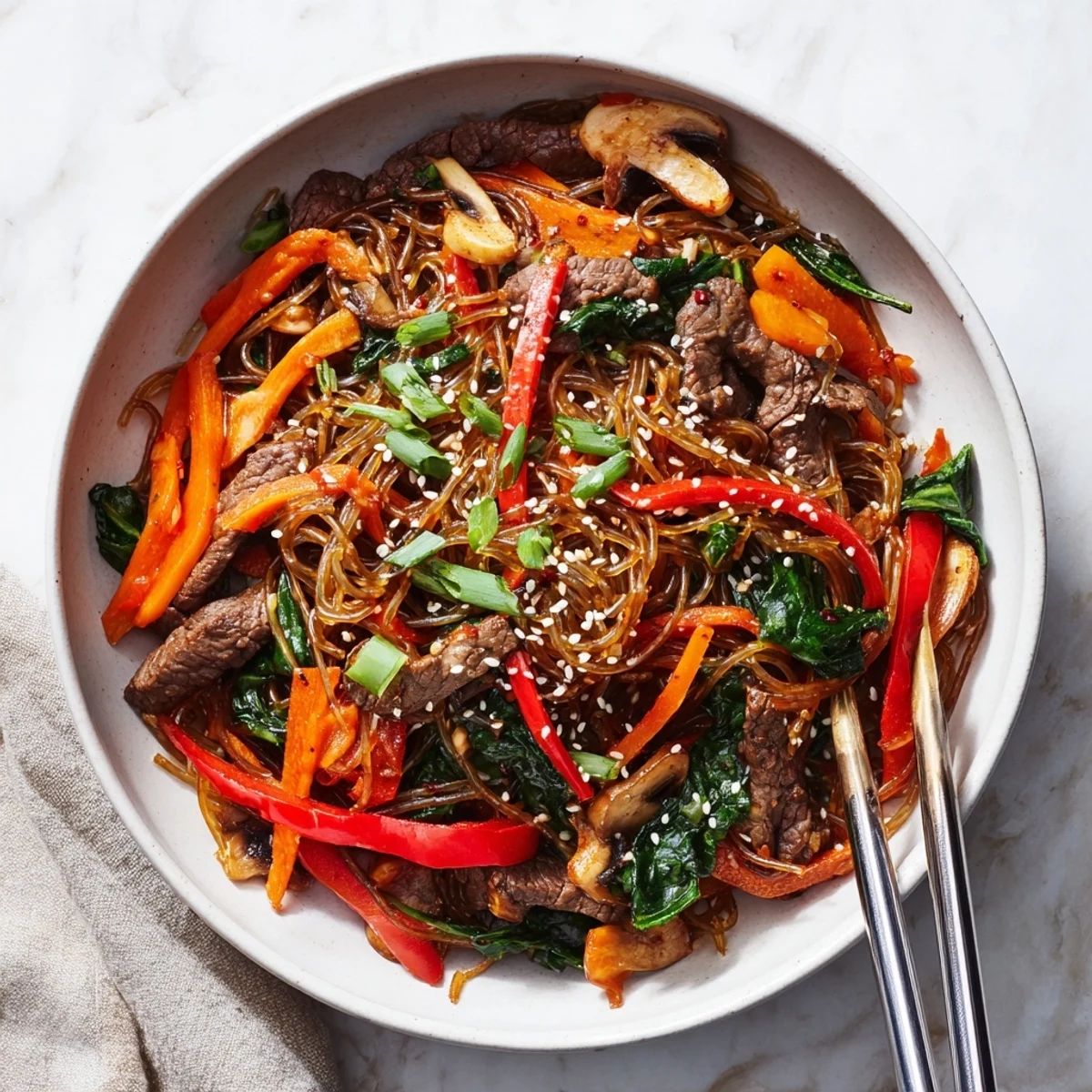
 Create a satisfying Korean-inspired noodle dish featuring tender marinated beef, crisp vegetables, and springy sweet potato noodles coated in a rich gochujang-based sauce. The preparation involves marinating sliced beef in soy and sesame, boiling the noodles until perfectly chewy, and quickly stir-frying colorful vegetables like carrots, bell peppers, and mushrooms. Everything comes together in a hot wok with a homemade sauce blending soy sauce, brown sugar, gochujang, rice vinegar, and fresh ginger. The entire meal comes together in just 40 minutes, making it ideal for busy weeknights when you crave something bold and comforting.
The first time I made these Korean beef noodles, my tiny apartment smelled incredible. My roommate poked her head in, asking what takeout Id ordered. When I told her I'd cooked it myself in under 30 minutes, she demanded the recipe immediately. Now its one of those meals I make when I want something that feels special but doesn't require hours standing over the stove.
Last winter, my friend recovering from surgery mentioned craving something comforting but not too heavy. I brought over a steaming bowl of these noodles, and she ate slowly, eyes closed, saying it was exactly what her body needed. Theres something about the chewy sweet potato noodles and tender beef that feels like a hug in bowl form.
Ingredients
- 350 g beef sirloin or ribeye: Slice it thinly against the grain and let it marinate while you prep everything else
- 300 g Korean sweet potato noodles: These chewy glass noodles are worth seeking out at Asian markets, though udon works in a pinch
- 1 medium carrot and 1 red bell pepper: The julienne cuts cook quickly and add gorgeous color against the dark sauce
- 100 g shiitake mushrooms: They bring an earthy depth that balances the sweetness of the sauce
- 3 tbsp soy sauce and 1 tbsp gochujang: This combination creates that addictive Korean flavor profile
- 1 tbsp brown sugar: Essential for caramelization and that restaurant quality gloss
Instructions
- Marinate the beef:
- Toss the sliced beef with soy sauce, sesame oil, sugar, and garlic. Let it sit for at least 10 minutes while you prep your vegetables.
- Cook the noodles:
- Boil according to package directions, then drain and rinse under cold water. This stops the cooking and keeps them perfectly chewy.
- Whisk the sauce:
- Combine all sauce ingredients until the sugar dissolves completely. Taste and adjust the heat level based on your preference.
- Stir fry the vegetables:
- Work in batches if needed. Your vegetables should still have some crunch when they hit the plate.
- Cook the beef:
- Get your wok ripping hot before adding the meat. Listen for that satisfying sizzle and dont crowd the pan.
- Combine everything:
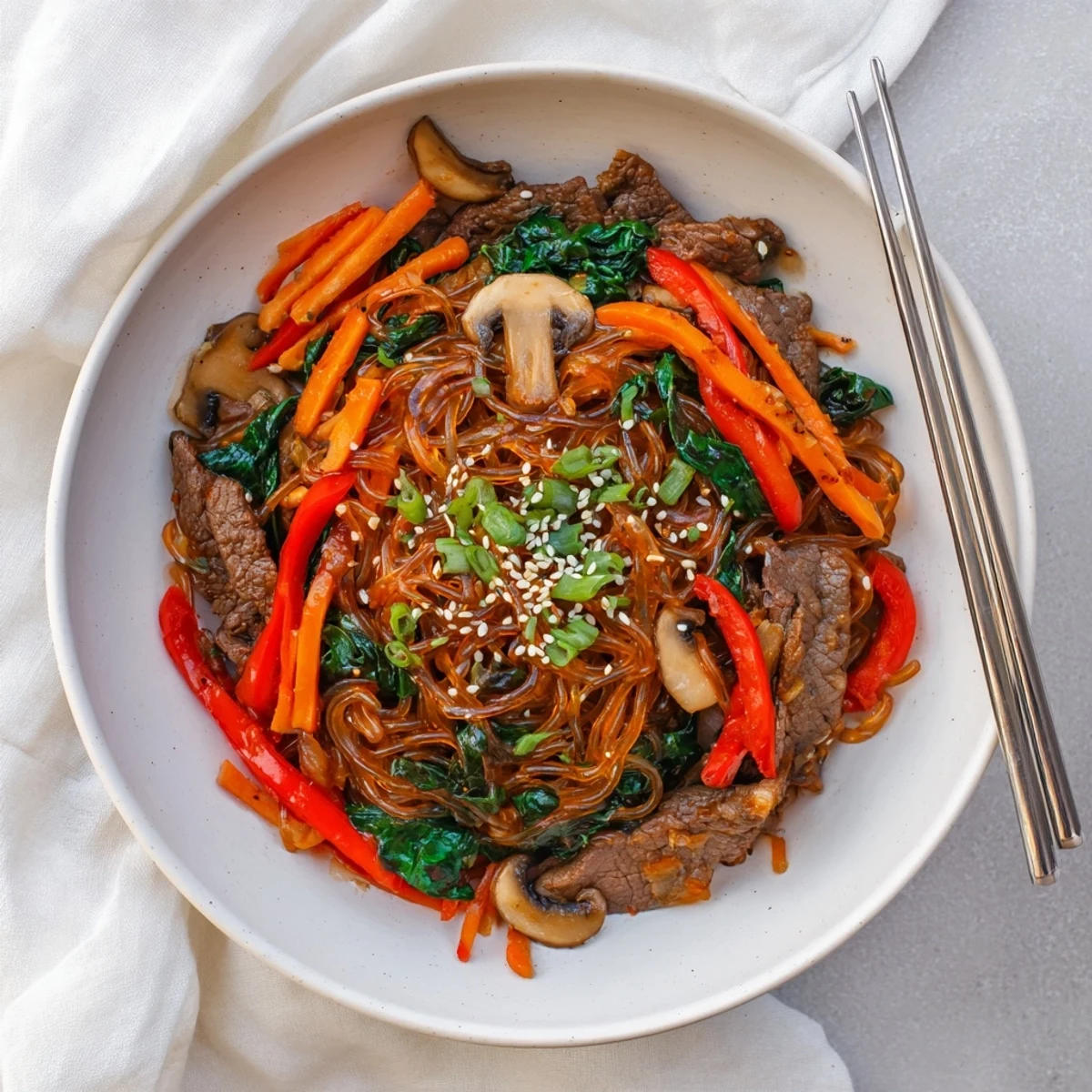
- Add the noodles, vegetables, and sauce. Toss vigorously for 2 to 3 minutes until every strand is coated and glossy.
 Pin it
 My mother-in-law, who grew up in Seoul, took one bite and asked if I'd learned the recipe from her grandmother. The highest compliment I could have received. Now whenever we visit, these noodles are the first thing she requests.
Choosing Your Noodles
Sweet potato noodles, or dangmyeon, have this incredible bounce that other noodles just cant match. They absorb sauce beautifully without becoming soggy. If you can only find them dried, give them a quick soak before boiling to help them cook more evenly.
Getting the Sear Right
A smoking hot wok is non-negotiable for that restaurant quality caramelization on the beef. Pat your marinated meat dry with paper towels before adding it to the pan. This simple step prevents steaming and ensures those gorgeous browned edges develop properly.
Make Ahead Strategy
The sauce can be whisked together up to three days in advance and stored in the refrigerator. This actually helps the flavors meld together beautifully. When you're ready to cook, just give it a quick stir and proceed with the recipe.
- Cut all your vegetables the night before and store them in separate containers
- The entire dish reheats surprisingly well in the microwave with a splash of water
- Double the sauce recipe and freeze half for an even faster meal next time
 Pin it
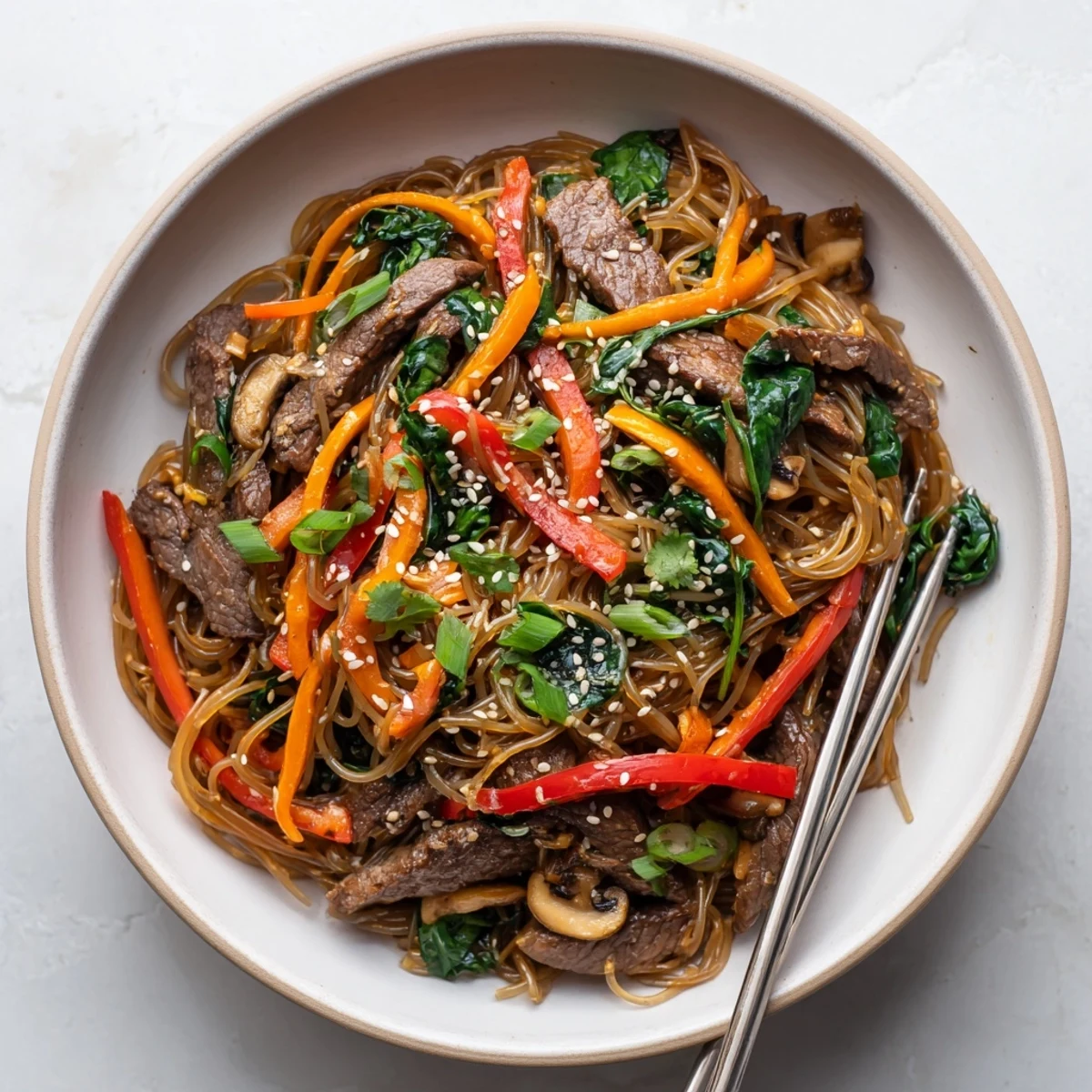
 These noodles have become my go-to for weeknight dinners when I want something that feels like a treat but comes together easily. Hope they find a regular spot in your rotation too.
Recipe FAQs
- → What type of noodles work best for this dish?
-
Korean sweet potato noodles (dangmyeon) are traditional and provide the perfect chewy texture. Dried udon noodles make an excellent substitute if you can't find them.
- → Can I make this dish spicy?
-
Absolutely! Adjust the amount of gochujang to increase the heat level, or add Korean chili flakes (gochugaru) for an extra kick.
- → What vegetables can I add?
-
Beyond the suggested carrots, bell peppers, and mushrooms, try adding zucchini, broccoli, snap peas, or bok choy for extra color and nutrition.
- → Is there a vegetarian option?
-
Replace the beef with firm tofu or seitan, use vegetable broth instead of water in the sauce, and ensure your gochujang is vegetarian-friendly.
- → How do I store leftovers?
-
Store in an airtight container in the refrigerator for up to 3 days. Reheat gently in a skillet or microwave, adding a splash of water if the noodles seem dry.
- → Can I freeze this dish?
-
Freezing is not recommended as the noodles may become mushy and the vegetables lose their texture. It's best enjoyed fresh.