
 Pin it
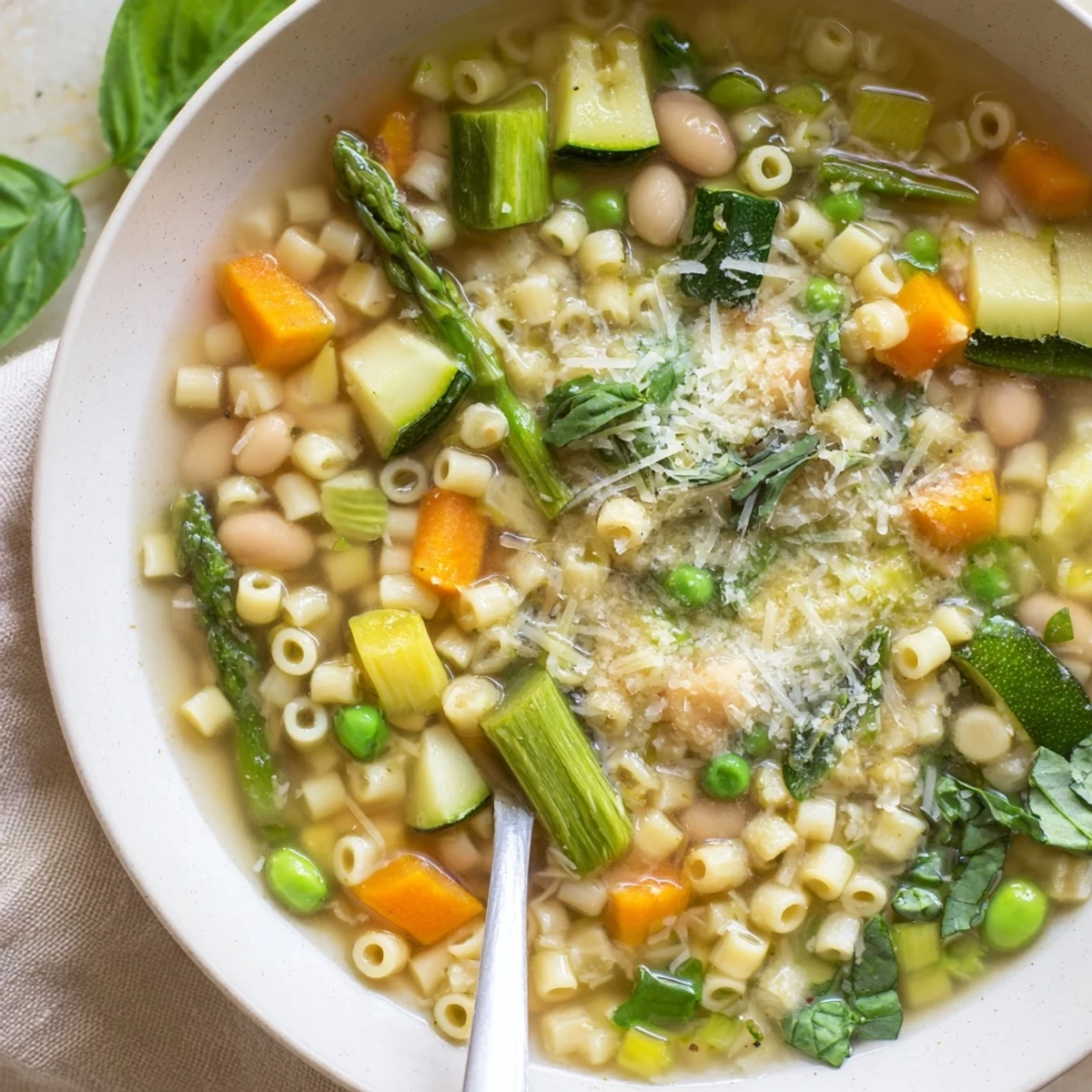
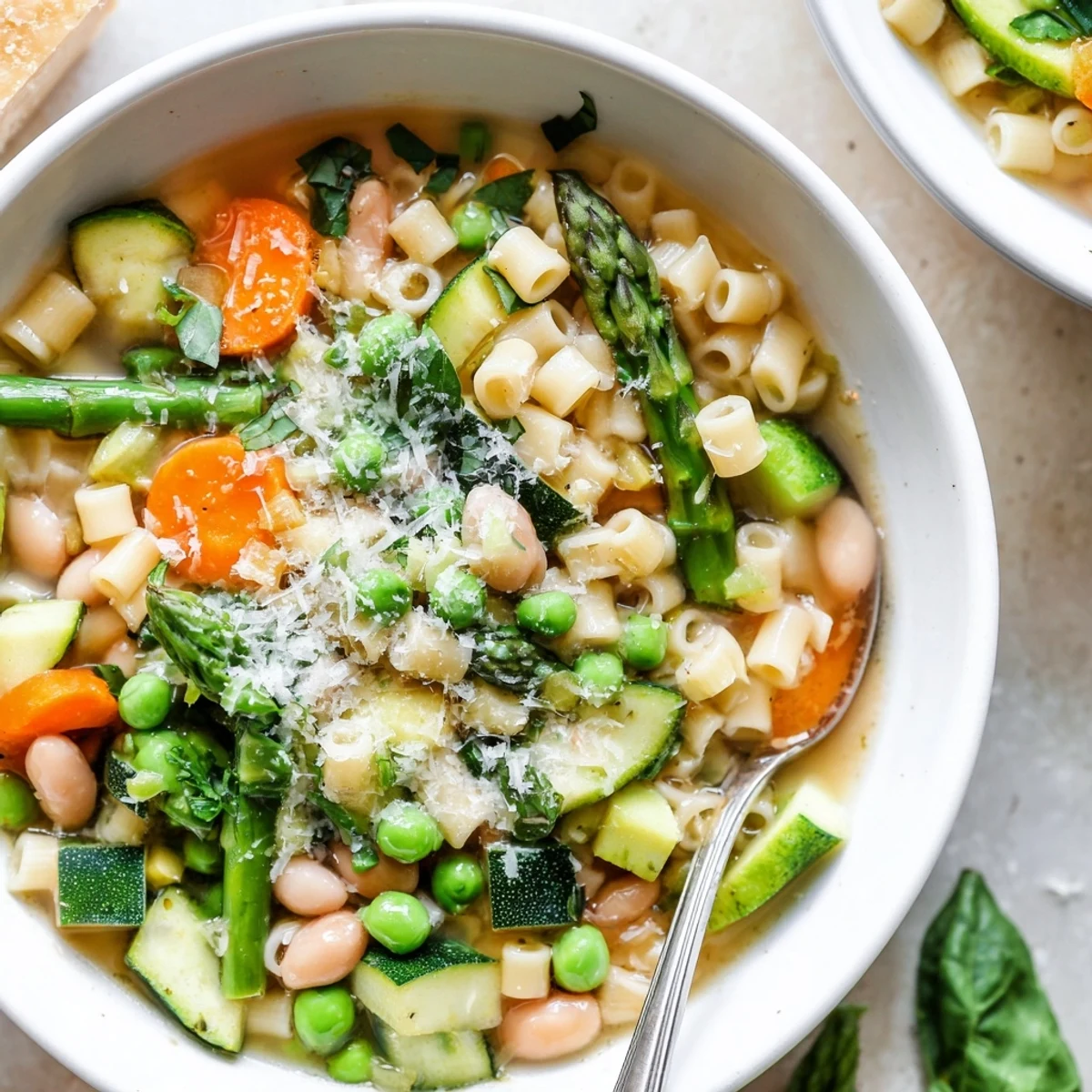
 This spring minestrone brings together the best of the season in one pot. Asparagus, zucchini, and sweet peas simmer alongside cannellini beans and small pasta in a fragrant vegetable broth. Fresh basil, parsley, and a splash of lemon juice brighten every bowl, while optional Parmigiano Reggiano adds a savory finish. Ready in under 45 minutes, it's a nourishing Italian classic that pairs beautifully with crusty bread.
There was a morning last April when my farmers market haul got away from me and I came home with way more spring vegetables than any reasonable person needed. The solution turned out to be this pot of minestrone, which I threw together with the kind of careless confidence that usually leads to disaster but somehow produced something worth making again and again.
I made a double batch for a friend who was recovering from a cold and she called me the next morning asking for the recipe before she even said good morning. That kind of reaction tells you everything you need to know about a soup.
Ingredients
- Olive oil: A good extra virgin makes a real difference here since it is the flavor foundation of the whole pot
- Onion: Finely chopped so it melts into the broth rather than leaving visible chunks
- Garlic: Two cloves is enough to perfume the soup without overpowering the delicate vegetables
- Carrots: Diced small so they cook at the same rate as the softer spring veg
- Asparagus: Cut into one inch pieces, and use the tender upper halves rather than the woody stalks
- Zucchini: Diced to match the carrots for an even bite throughout
- Peas: Fresh are ideal but frozen work perfectly fine, just do not thaw them first
- Baby spinach: Added at the very end so it stays vibrant and does not turn muddy
- Vegetable broth: Use a low sodium version so you can control the seasoning yourself
- Cannellini beans: Drained and rinsed well to keep the broth clear and clean tasting
- Small pasta: Ditalini or orzo both work, just avoid anything larger than a thumbnail
- Salt and black pepper: Start with the suggested amounts and adjust at the very end
- Fresh basil and parsley: Do not even think about using dried herbs here, the fresh ones make the soup sing
- Lemon juice: Just one tablespoon brightens the entire pot in a way that feels like magic
- Parmigiano Reggiano: Optional but honestly it turns a very good soup into an unforgettable one
Instructions
- Build the base:
- Heat the olive oil in a large pot over medium heat and add the chopped onion. Cook for about three minutes until it goes soft and translucent, stirring so it does not catch.
- Add the aromatics:
- Toss in the minced garlic and diced carrots, cooking for another two or three minutes until the kitchen smells incredible.
- Bring in the spring vegetables:
- Stir in the asparagus, zucchini, and peas. Let them cook for two minutes, just enough to take the raw edge off without softening them too early.
- Simmer with broth and beans:
- Pour in the vegetable broth and bring everything to a boil. Add the cannellini beans and pasta, then reduce the heat, cover the pot, and simmer for eight to ten minutes until the pasta and vegetables are tender.
- Finish with greens and herbs:
- Stir in the baby spinach, chopped basil, and parsley. Cook for one or two minutes, just until the spinach wilts and the herbs release their fragrance.
- Season and serve:
- Remove the pot from heat, stir in the lemon juice, and taste for salt and pepper. Ladle into bowls and finish with grated Parmigiano Reggiano if you are using it.
 Pin it
 My neighbor brought over a loaf of sourdough the same day I first made this, and we ate it standing in my kitchen with the windows open. Something about that combination of warm bread, bright soup, and spring air made it feel like the whole season had arrived at once.
Swapping in Different Vegetables
I have used fava beans, green beans, and even thinly sliced leeks in place of or alongside the standard lineup. The rule is simple: anything that cooks quickly and tastes good in spring belongs in this pot.
Making It Vegan
Skip the Parmigiano at the end or swap in a good plant based parm. The soup is so flavorful from the fresh herbs and lemon that you genuinely will not miss the dairy.
What to Serve Alongside
A crusty loaf and a cold glass of Pinot Grigio turn this from a simple soup into a proper meal. I have also served it over a scoop of cooked farro when I wanted something more filling.
- Crusty bread is nonnegotiable for soaking up the broth
- A light white wine cuts through the vegetables beautifully
- Leftovers taste even better the next day once the flavors fully meld
 Pin it
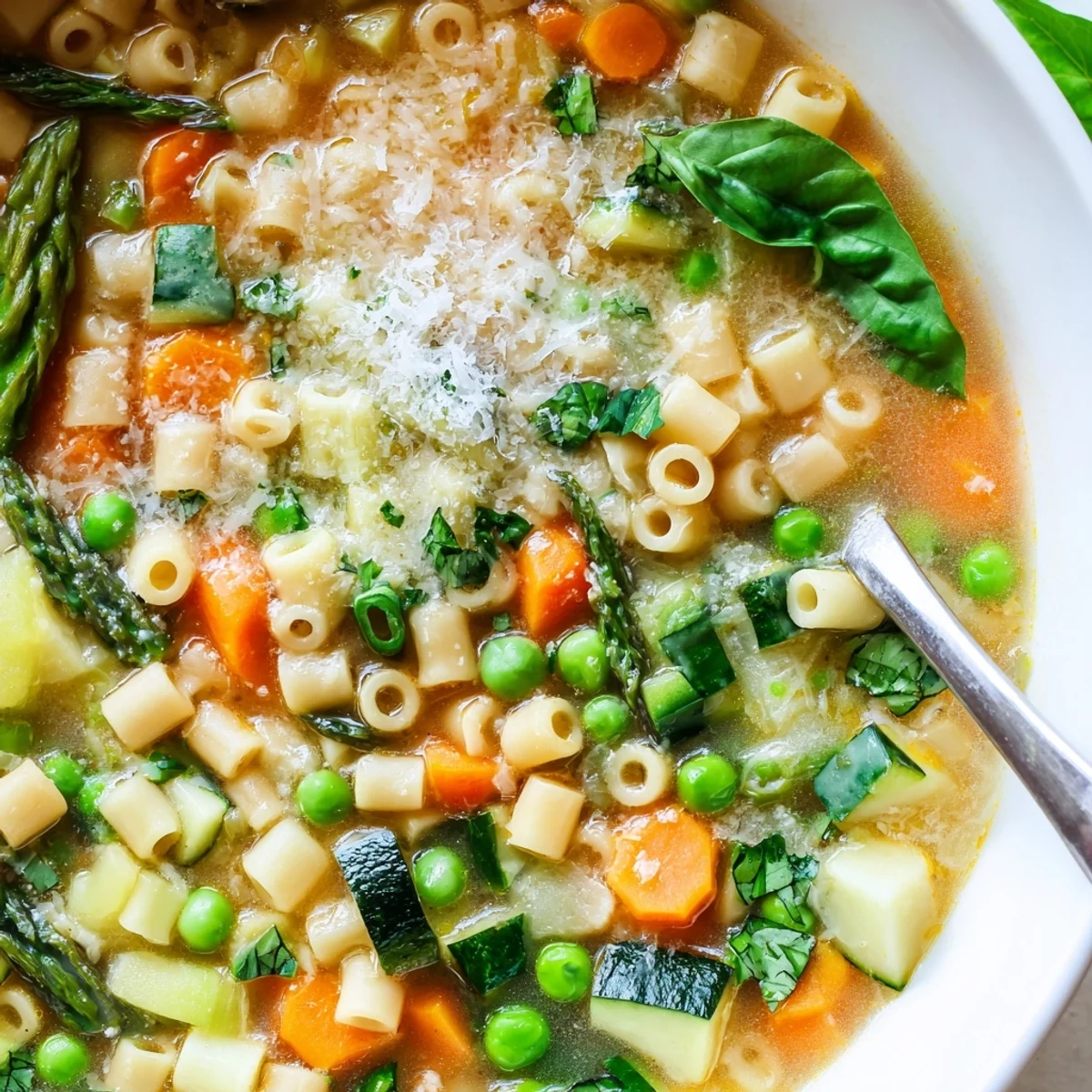
 This is the soup that made me stop thinking of minestrone as a heavy winter dish and start treating it as a celebration of whatever is fresh right now. Keep it in your back pocket and it will never let you down.
Recipe FAQs
- → What vegetables work best in spring minestrone?
-
Asparagus, zucchini, peas, and carrots are classic choices. You can also add fava beans, green beans, or leeks depending on what's fresh and available.
- → Can I make this soup vegan?
-
Yes, simply skip the Parmigiano Reggiano garnish or use a plant-based cheese alternative. The soup itself is entirely vegetable-based.
- → What type of pasta should I use?
-
Small shapes like ditalini, orzo, or mini shells work best because they spoon easily and cook quickly in the broth.
- → How long does spring minestrone keep in the fridge?
-
Stored in an airtight container, it stays fresh for up to 3 days. The pasta may absorb some broth, so add a splash of water or stock when reheating.
- → Can I freeze this soup?
-
It freezes well for up to 2 months. For the best texture, consider cooking the pasta separately and adding it when reheating, as pasta can soften in the freezer.
- → What should I serve with minestrone?
-
Crusty bread is the traditional pairing. A light white wine like Pinot Grigio or a simple side salad also complements it nicely.